Number Transfer Redesign: Reducing Customer Friction Across Channels
Redesigned the mobile number transfer experience to reduce a 33% fallout rate, resulting in 1.5M fewer failed transfers annually.
When customers transferred their mobile numbers to Verizon, 33% experienced "fallout" — failures that require manual intervention by customer service representatives. This created significant operational costs and often a poor first service experience for new customers.
In addition to the third of customers who experienced fallout, a small but significant number didn't have or know the account numbers and PINs required from their old carrier. With no visibility into transfer status and no way to self-correct, customers were forced to troubleshoot on their own — bouncing between retail stores, websites, and customer service.
Key Metrics
We conducted user interviews and collaborated with product managers to create a comprehensive service blueprint mapping the end-to-end porting journey across all touchpoints.
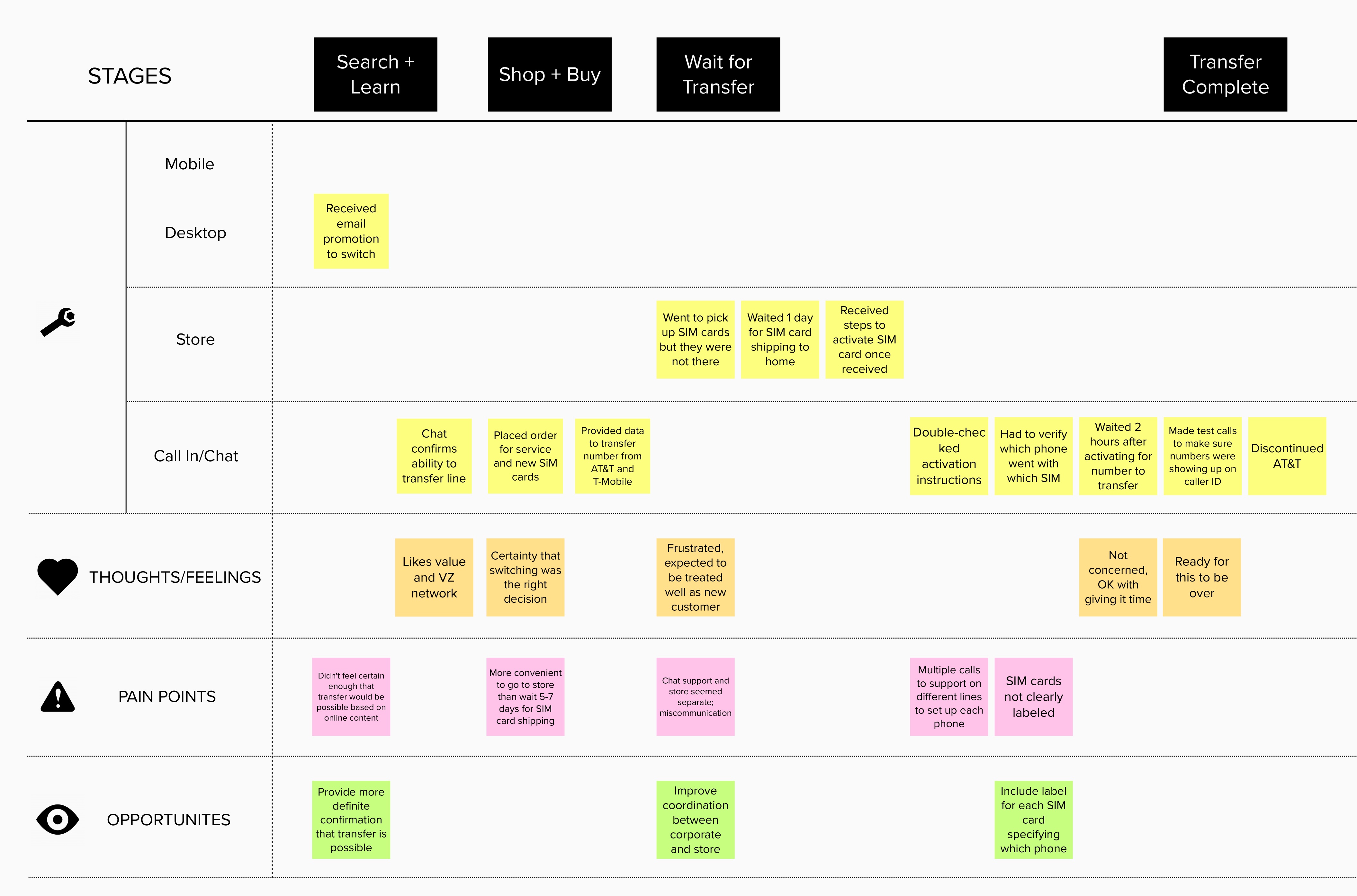

What we learned
- Channel confusion — customers bounced between retail, web, and phone with inconsistent messaging at each touchpoint.
- Information opacity — the transfer process felt like a "black box" with no visibility into status or next steps.
- Messaging chaos — dozens of error messages with conflicting language and unclear action items.
- System fragmentation — legacy backend systems across retail, IVR, and digital channels didn't communicate effectively.
Rather than rebuild legacy systems, we designed a unified customer experience layer that worked across existing infrastructure — giving customers agency and visibility regardless of where they started.
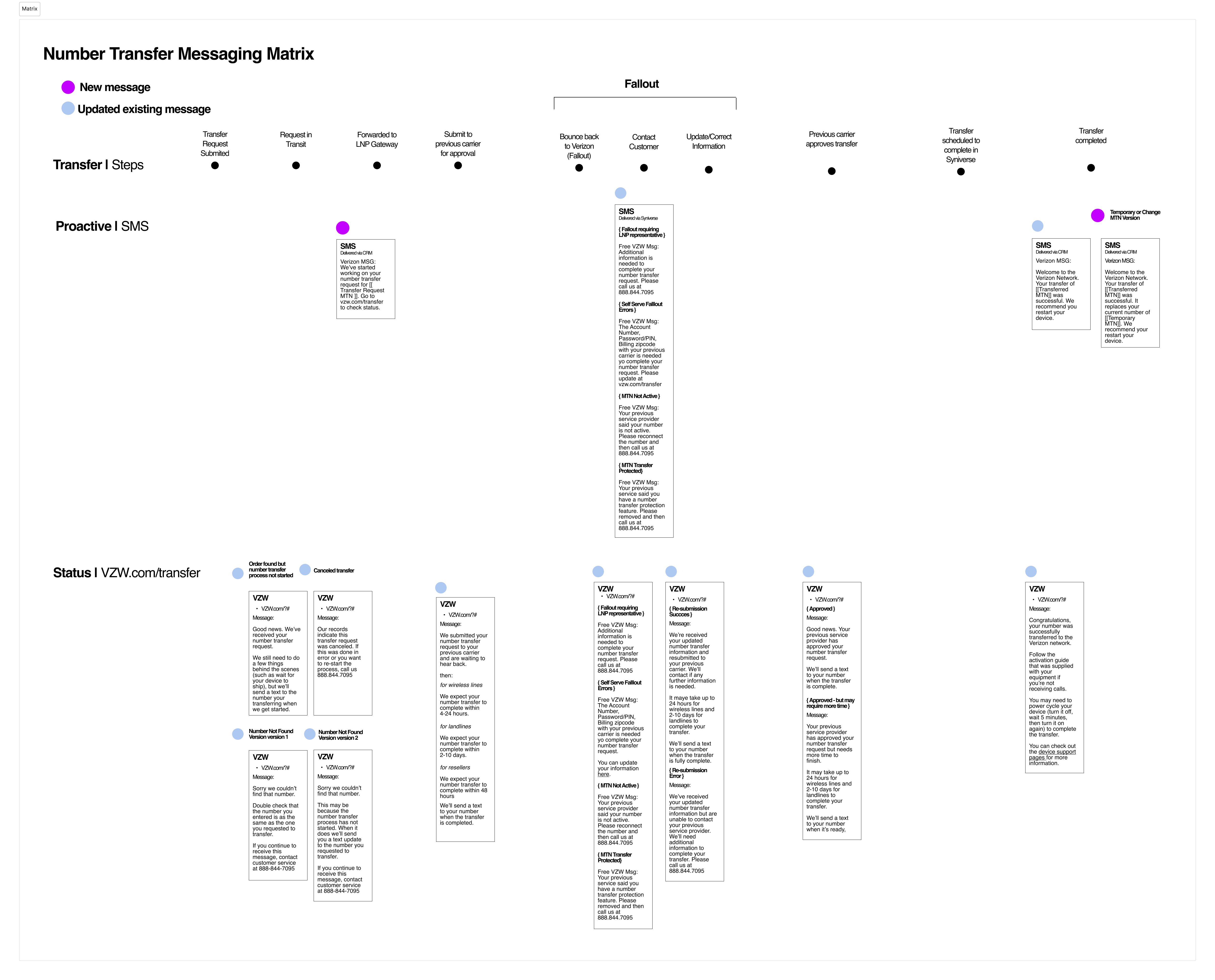
Unified Messaging Framework
Audited and streamlined scores of status and error messages down to four core types with clear, actionable language. Added proactive "device waiting to ship" notifications to set expectations.
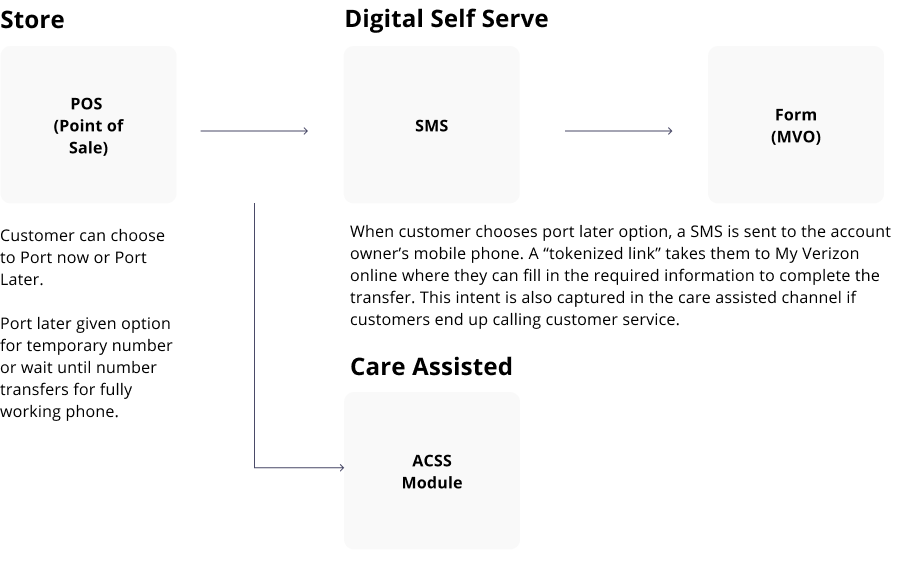
Retail to Digital Handoff
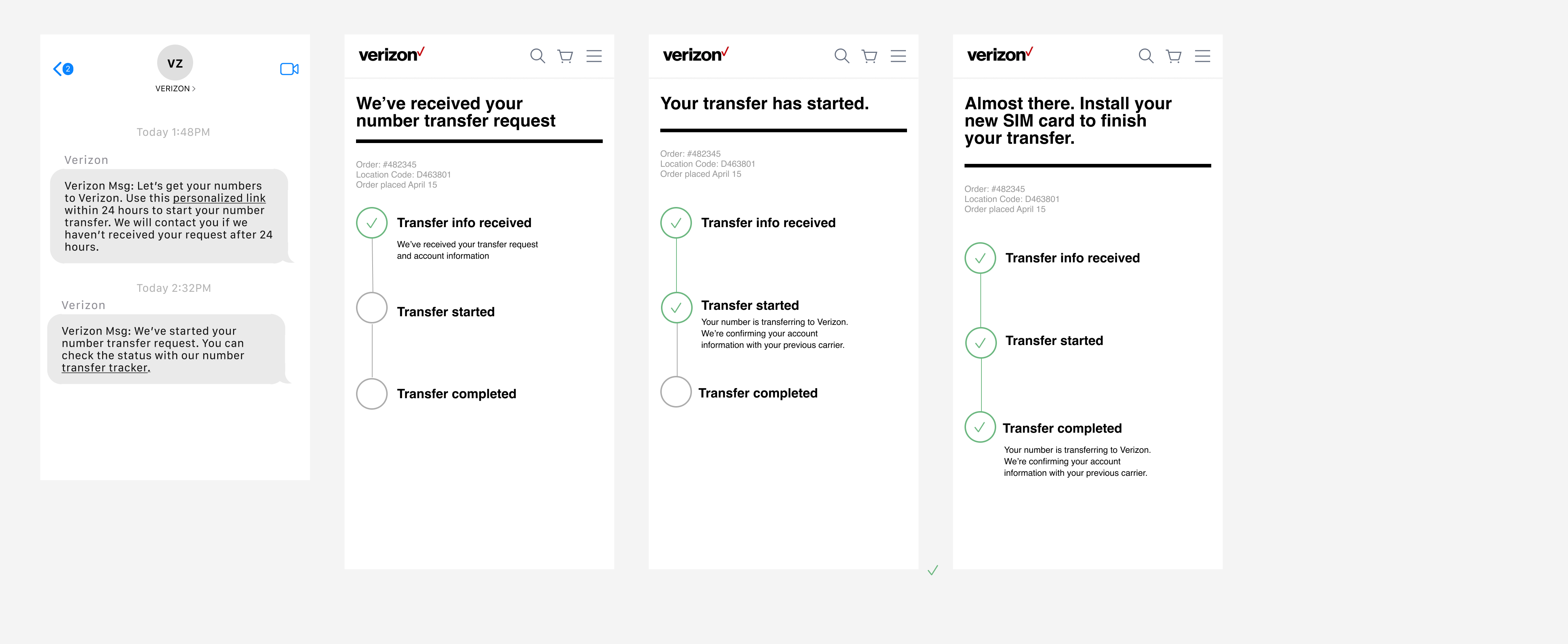
Created an SMS-based bridge for the 75% of customers who started in stores:
- Sent automated text messages to customers who initiated transfers.
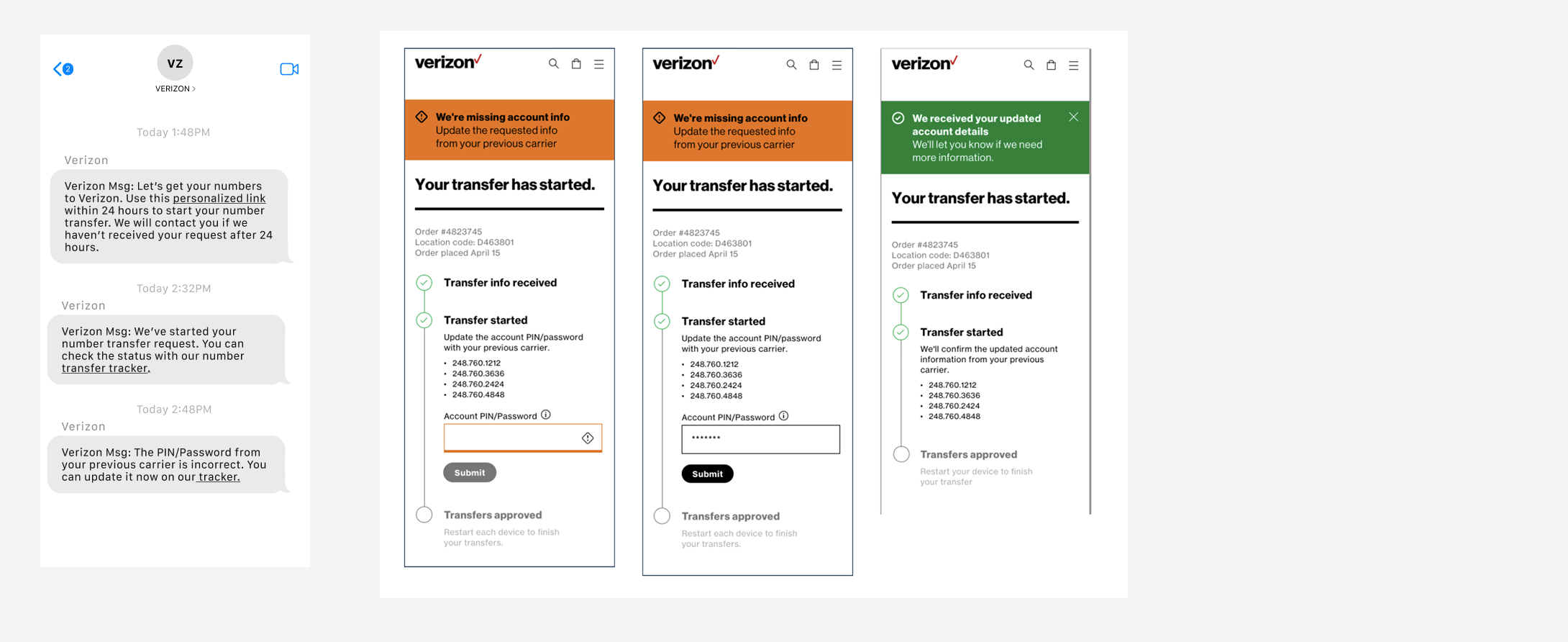
- Linked to a mobile web form for missing information.
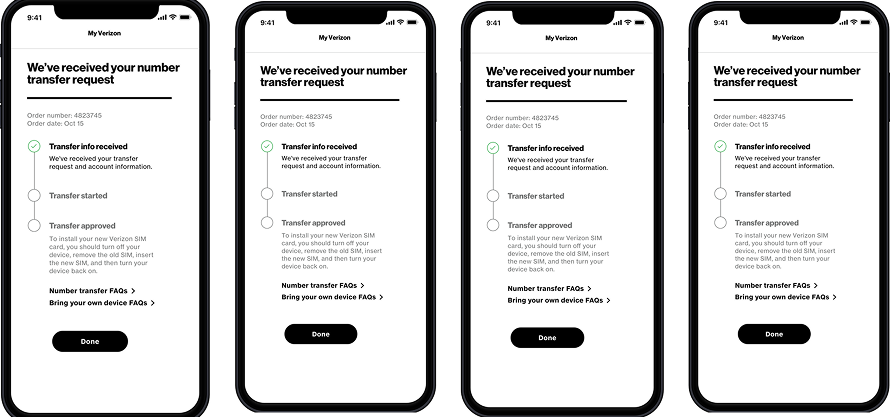
- Provided a real-time status tracker for completed transfers.
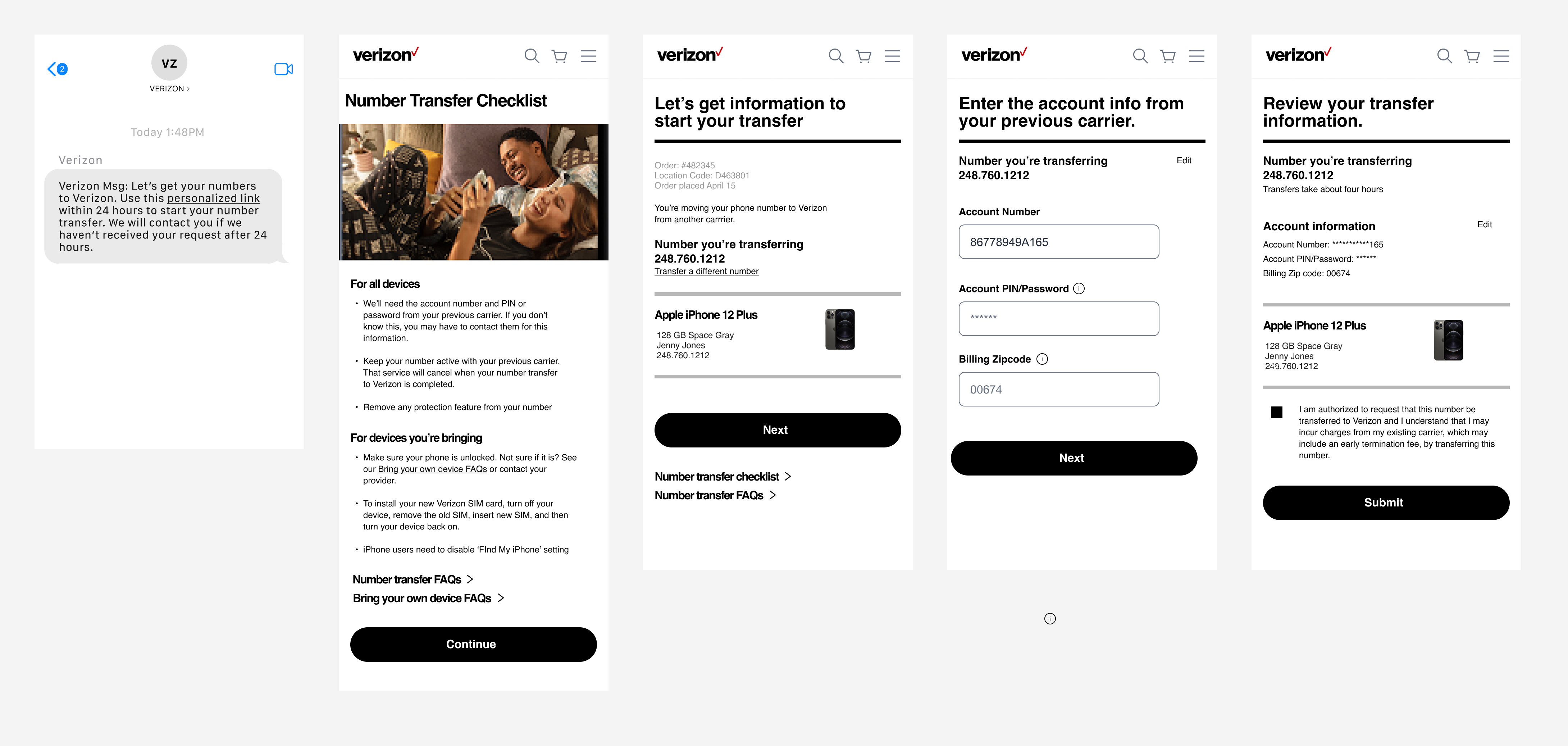
Self-Service Status and Updates
Built responsive interfaces allowing customers to:
- Check transfer status across web, app, and IVR.
- Submit missing account information on their own schedule.
- Receive clear, jargon-free guidance on next steps.
Cross-Channel Integration
Coordinated with technical teams to sync data across retail systems, IVR platforms, and digital channels — ensuring consistent information regardless of touchpoint.
2.5% reduction in fallouts in the year following launch (2022) — roughly 1.5M fewer failed transfers annually.
Working Within Constraints — this project taught me how to drive customer experience improvements within the reality of legacy systems. Rather than waiting for a perfect technical solution, I focused on the experience layer: unified messaging, proactive communication, and smart channel handoffs.
Cross-Functional Orchestration — success required aligning retail, digital, IVR, and technical teams around a shared vision. I used the service blueprint as a collaboration tool to build consensus and identify integration points across siloed systems.
Incremental Impact — by starting with the highest-volume channel (retail-to-digital) and the clearest pain point (messaging), we could deliver value quickly while building toward a more comprehensive omnichannel solution.